How long does it take to replace a sewer line? You might be able to get a spot repair done in a day. Sewer line replacement near you may take several days or even longer depending on the complexity. The answer depends on how much pipe needs replacement, where it’s located, how easily crews can reach it, the replacement method, and your site conditions.
There’s also a difference between the time spent physically replacing the pipe and the total project timeline. Diagnosis, utility locating, permits, inspections, excavation, and restoration can extend the process beyond the actual installation.
Here’s a rough timeline, but keep in mind your job may look very different:
- Spot Repairs: 1 day
- Traditional Open-Trench Replacement: 2 to 3 days
- Trenchless Replacement: 1 to 2 days
- Under-Slab Sewer Replacement: 3 to 5+ days
- Restoration: 1 to 2 days
What Happens During a Sewer Line Replacement?
Here’s how plumbers approach a sewer line issue.
1. Diagnose and Locate the Problem
Before replacing anything, the plumber needs to determine where the problem is and how much pipe is affected. Depending on the situation, that may involve a sewer camera inspection or other diagnostic work.
2. Plan the Replacement
Next comes deciding how to reach and replace the affected piping and whether a spot repair is the best approach or whether your need sewer line replacement near you.
The plumber will need to consider the sewer’s depth and route as well as concrete, landscaping, driveways, patios, walls, or other obstacles. Underground utilities may need to be located before excavation begins. For slab homes, that might mean cutting into the slab and planning for restoration after work is completed.
Mesa permitting and inspection requirements can also affect the overall schedule even though they aren’t part of the physical pipe installation.
3. Access the Sewer
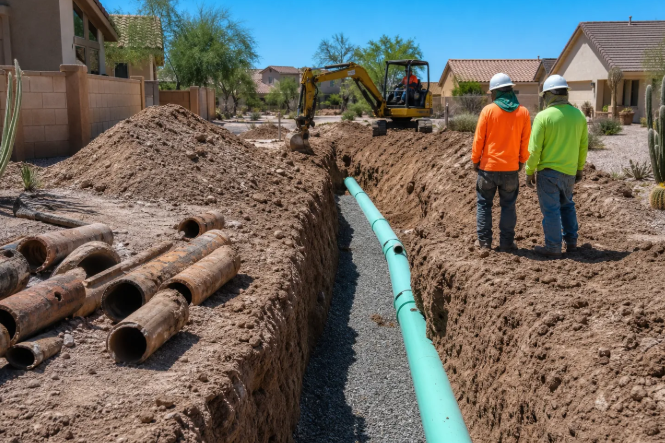
With traditional excavation, crews need to expose the affected sewer line. A relatively shallow pipe in your yard presents a much different project from piping buried deeply or located beneath concrete. If the sewer runs underneath the home’s slab, creating access can add another step to the process.
4. Replace the Pipe
Once the sewer is accessible, the failed piping can be repaired to replaced.
5. Inspect and Restore the Site
The new piping needs to be checked for proper installation and drainage, and city inspections may need to be completed before excavated areas are closed. Your plumber will coordinate with inspectors, but inspectors set their own schedules.
Restoring landscaping, concrete, flooring, or other surfaces can add additional time after the sewer itself is operational.
What Can Make Sewer Replacement Take Longer?
Even two similar Mesa homes can have very different project timelines. Here’s what impacts timing the most.
| FACTOR | WHY IT CAN ADD TIME |
| LONGER REPLACEMENT SECTION | More piping and site work are involved. |
| DEEP SEWER LINE | Additional excavation may be necessary. |
| UNDER-SLAB PIPING | Access and restoration can be more involved. |
| LANDSCAPING OR HARDSCAPING | Crews may need additional excavation or restoration. |
| MULTIPLE DAMAGED SECTIONS | The project scope becomes larger. |
| UNDERGROUND UTILITIES | Existing lines may affect excavation. |
| PERMITS AND INSPECTIONS | Scheduling can depend on outside agencies. |
| UNEXPECTED CONDITIONS | Conditions underground may differ from what was anticipated. |
Your contractor should be able to explain which of these factors apply to your property before work begins.
Is Trenchless Sewer Replacement or Relining Faster?
It’s hard to say until a full diagnosis has been done. There are plenty of variables and the cause and conditions will dictate repairs.
Traditional sewer replacement generally requires excavation to reach the affected piping. Depending on the problem, certain trenchless techniques can reduce how much digging is required. Less excavation can potentially shorten portions of the project and reduce disruption to landscaping or hardscaping. However, pipe relining or trenchless methods aren’t appropriate for every damaged sewer.
What If the Sewer Line Is Under a Concrete Slab?
The answer to how long does it take to replace a sewer line will be different if you need to go under the slab.
Determining the failure’s location before opening the slab becomes especially important. The more accurately the affected section can be identified, the better the contractor can plan access. Depending on the home’s plumbing configuration and the nature of the failure, rerouting may sometimes be another option worth evaluating.
Can You Stay Home During Sewer Replacement?
Often, but expect some disruption. There may be periods when toilets, showers, sinks, washing machines, and other fixtures can’t drain normally. For a short interruption, remaining at home may be practical. For longer periods without usable plumbing, you may want to make other arrangements.
Get a Timeline Based on Your Sewer Line Replacement
If you’re searching for sewer line replacement near me, ask prospective contractors how much pipe actually needs to be replaced, why they recommend a particular method, how long sewer service will be unavailable, and whether their estimated schedule includes inspections and restoration.
Most importantly, get a timeline based on your specific sewer rather than assuming your project will match someone else’s.
For a clearer picture of what your East Mesa sewer project will involve, schedule an evaluation with George Brazil Plumbing & Electrical. Get a professional evaluation and a formal replacement plan and timeline.