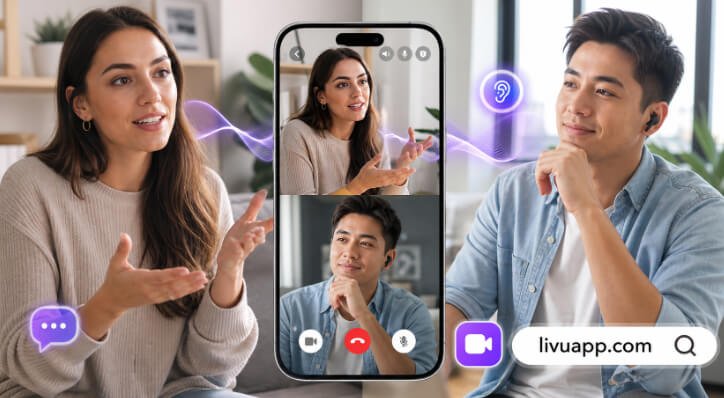
People often prepare for online conversations by thinking about what they are going to say. They collect questions, rehearse introductions, and search for interesting topics. However, the quality of a conversation usually depends just as much on listening as it does on speaking.
Listening in a video chat is more active than remaining silent while the other person talks. It involves noticing details, responding to what was actually said, and giving the other participant enough room to complete an idea.
These habits are particularly valuable when meeting someone for the first time. Without a shared history, both people rely on small verbal and visual signals to understand whether the conversation feels comfortable and engaging.
Why Listening Can Be Difficult Online
In face-to-face conversations, people receive information from the entire environment. They notice posture, gestures, eye contact, changes in tone, and the reactions of others nearby.
A video call presents a smaller frame. Some body language is outside the camera view, minor connection delays can interrupt the rhythm, and participants may be distracted by their own image on the screen.
The desire to avoid silence can create another problem. Instead of listening carefully, someone may spend the other person’s speaking time planning the next question. The response may then sound unrelated because it follows a prepared script rather than the conversation.
The solution is not to eliminate every pause. It is to become more comfortable with listening long enough to understand what the other person is trying to communicate.
Start With Questions That Invite More Than One-Word Answers
A good listener still needs to know how to begin. Questions that can be answered with only “yes” or “no” often place too much pressure on the person asking them to keep producing new topics.
Open questions provide more material for both participants. For example:
- What do you enjoy doing when you have a free afternoon?
- What is something interesting you learned recently?
- Which place in your city would you recommend to a visitor?
- What kind of music improves your mood?
- What are you looking forward to this month?
People exploring live 1v1 conversations can use questions like these to create an easy starting point. The purpose is not to conduct an interview. It is to give the other person an opportunity to introduce a topic they genuinely enjoy discussing.
Once that happens, the listener no longer needs to search constantly for new material. The answer itself provides possible directions.
Listen for the Detail With Energy Behind It
Not every part of an answer carries equal importance. People often reveal their strongest interest through a particular detail, a change in expression, or a more animated tone.
Someone might say, “I stayed home this weekend, watched a film, and tried cooking a dish my grandmother used to make.” Each part could become a follow-up topic, but the family recipe may carry the most personal energy.
A thoughtful response might be, “Was it a recipe you already knew, or did you have to learn it from someone?”
That question demonstrates that the listener noticed the distinctive part of the answer. It also gives the speaker room to tell a story instead of simply listing facts.
This technique works better than moving immediately to an unrelated question about work, weather, or another prepared topic.
Use Follow-Up Questions, but Avoid Interrogation
Follow-up questions are one of the clearest signs of attention. They show that a participant is not merely waiting for their turn to speak.
However, too many questions in succession can make a conversation feel like an interview. Balance matters. After asking a follow-up question, the listener can share a related detail from their own experience.
For example:
“That sounds like a challenging hike. I tried a mountain trail last year and underestimated how quickly the weather could change. What was the hardest part of your trip?”
This response contributes something personal while returning the conversation to the other participant. Both people remain involved, and the exchange develops around a shared topic.
Users comparing platforms through searches such as coo meet may focus initially on matching speed or interface features. Yet after two people connect, conversational balance becomes more important than the mechanism that introduced them.
Let Short Pauses Do Their Job
Silence during a video call can feel longer than it really is. A pause of two seconds may cause someone to assume the conversation has become awkward.
In reality, the other participant may be translating a thought, remembering a detail, or deciding how much they want to share. Interrupting too quickly can prevent the answer from developing.
A useful habit is to wait briefly after someone appears to finish speaking. If they continue, the extra space helped. If they do not, the listener can respond without creating a disruptive delay.
Connection latency is another reason to slow down slightly. When both people begin speaking at once, repeatedly stopping and restarting can make the interaction tiring. A small pause helps compensate for the technical delay and creates a calmer rhythm.
Show That You Are Listening Visually
Video conversation provides listening signals that are not available in ordinary text chat. A nod, a smile, or a change in expression can confirm that the message has been received.
Effective visual listening does not require exaggerated reactions. In fact, overly dramatic gestures may appear unnatural. Small and genuine responses are usually enough.
Looking toward the screen helps participants notice expressions, while occasionally looking at the camera can create a stronger impression of eye contact. Users do not need to stare directly into the lens throughout the call. Alternating naturally between the other person’s image and the camera is more comfortable.
It also helps to avoid constantly checking a second device. Even when the listener can follow both activities, looking repeatedly away from the screen may suggest that the conversation is not receiving full attention.
Reflect Back Important Ideas
Reflective listening means briefly restating the meaning of what someone said. It can be especially useful when the topic is detailed or when participants have different communication styles.
If someone says they recently moved and are excited but overwhelmed, a reflective response might be:
“It sounds like you are enjoying the new place, but there is still a lot to adjust to.”
The listener is not repeating every word. They are checking whether they understood the main feeling correctly.
This gives the speaker an opportunity to confirm, clarify, or expand. It can also prevent misunderstandings from quietly shaping the rest of the conversation.
During a live 1v1 exchange, reflective responses can help compensate for missed words, audio interruptions, or differences in accent without making the interaction feel overly formal.
Know When to Change the Subject
Listening well does not mean remaining on one subject indefinitely. Sometimes an answer becomes shorter, the person’s energy changes, or a topic appears to make them uncomfortable.
These signals suggest that it may be time to move elsewhere.
A gentle transition can be as simple as:
- “That reminds me of something else I wanted to ask.”
- “We can switch topics—what have you been watching lately?”
- “Speaking of weekends, do you prefer relaxing at home or going out?”
The ability to change direction is part of listening because it shows awareness of how the other person is responding.
Users should also respect direct boundaries. If someone does not want to discuss a subject, there is no need to ask why or attempt to persuade them.
End Conversations With the Same Consideration
Not every chat needs to be long. A brief conversation can still be positive when both people participate respectfully.
When it is time to leave, a simple closing is usually better than disappearing without explanation. Thanking the other person for the conversation and wishing them a good day creates a clear, courteous ending.
People using coo meet or another social video platform may encounter many different communication styles. Ending thoughtfully is one way to keep a short interaction positive even when the participants do not plan to speak again.
See also: Benefits of Professional Custom Website Design Services for Brands
Final Thoughts
The best conversationalists are not necessarily the people with the most stories or the cleverest opening lines. They are often the people who make others feel heard.
Ask questions that create room for real answers. Notice the details that carry energy. Use follow-up questions without turning the exchange into an interview. Allow short pauses, respond visually, and change topics when the other person’s comfort level shifts.
These habits are simple, but they can transform a random video match into a balanced human exchange—one in which both participants leave feeling that they genuinely took part.