Electric motors provide the mechanical movement required by a wide range of industrial machines. Among the different motor technologies available, three-phase induction motors are commonly considered for applications where reliable continuous operation is required.
They can be found in equipment such as pumps, fans, compressors, conveyors, machine tools, and production systems. However, selecting a suitable motor requires more than identifying the required power output. Electrical supply, speed, torque, operating conditions, and maintenance requirements should all be evaluated.
Understanding these factors can help businesses make more informed decisions when planning industrial equipment.
Read Also: The Psychological Impact of Technology
What Is an Induction Motor?
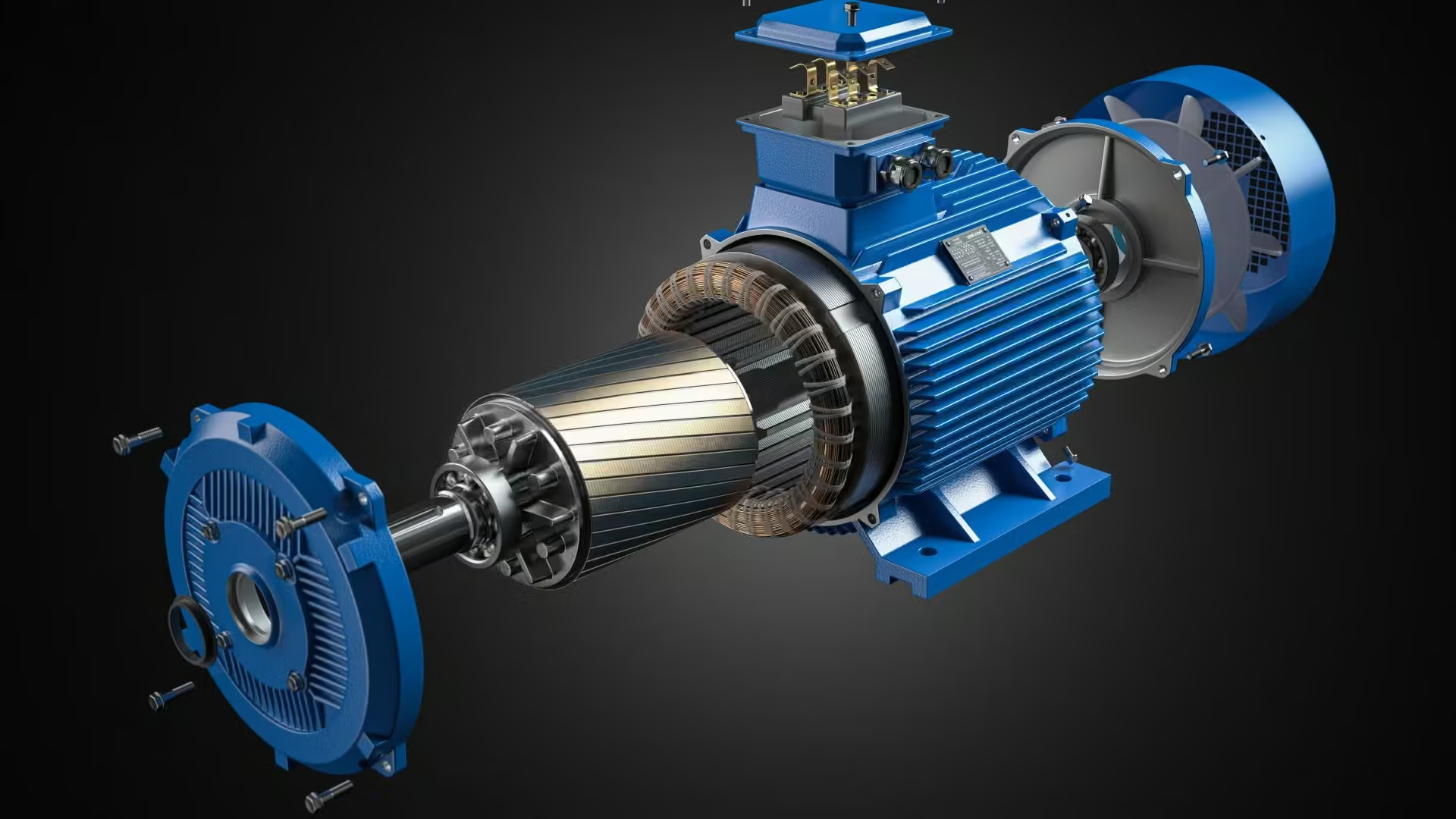
An induction motor is an electric motor in which the rotor receives its operating effect through electromagnetic induction rather than a direct electrical connection to the rotor.
This design has made induction motors widely useful in industrial applications. Their construction can be relatively straightforward, and they are available in configurations suited to many different machines.
Three-phase versions are particularly common in industrial facilities with compatible electrical supplies.
Why Three-Phase Operation Is Useful
Three-phase power can provide a practical way to supply industrial motors with continuous electrical energy.
The three electrical phases work together to produce a rotating magnetic field that drives the motor. This makes the technology suitable for many types of rotating machinery.
Before selecting a motor, however, the available electrical supply should be checked carefully to ensure compatibility with the motor’s rated voltage and frequency.
Matching Power to the Load
The required motor power depends on the machine being driven.
For example, a pump may require different characteristics from a conveyor or compressor. The load can also change depending on whether the machine operates continuously, intermittently, or under varying production conditions.
Choosing the correct power rating helps ensure that the motor is appropriately matched to its intended application.
Speed and Torque
Motor speed and torque are two important performance characteristics.
Some machines require relatively high speed, while others operate through gearboxes or mechanical transmission systems to achieve a lower output speed.
Torque requirements should also be considered, especially during startup. Equipment with demanding starting conditions may require specific motor characteristics.
Efficiency Considerations
Industrial motors can operate for thousands of hours over their service life.
For this reason, efficiency can be an important consideration in the selection process. Energy consumption depends on motor efficiency, operating load, running hours, and other system factors.
Businesses should evaluate expected operating conditions rather than relying only on the initial purchase price.
Environmental Conditions
The installation environment should be assessed before choosing a motor.
Temperature, moisture, dust, chemicals, ventilation, and other site conditions can affect motor performance and equipment protection requirements.
A motor installed in a clean indoor facility may have different requirements from one operating in a challenging industrial environment.
Installation Requirements
Correct installation helps a motor operate as intended.
The mounting arrangement, shaft alignment, coupling, electrical connections, grounding, and ventilation should all be checked.
Mechanical alignment is particularly important because incorrect alignment can place additional stress on bearings and connected equipment.
Maintenance Practices
Preventive maintenance can support long-term motor reliability.
Depending on the motor and application, maintenance may involve inspecting bearings, checking electrical connections, cleaning ventilation areas, monitoring temperature, and observing unusual noise or vibration.
A planned maintenance schedule can also help operators identify developing issues before they cause unexpected downtime.
Choosing a Suitable Industrial Motor
A practical selection process should include several technical criteria:
- Motor type
- Rated power
- Voltage
- Frequency
- Speed
- Torque requirements
- Duty cycle
- Efficiency
- Enclosure
- Mounting arrangement
- Environmental conditions
- Maintenance requirements
For businesses comparing three-phase induction motor solutions, XCMOTOR induction motor 3 phase can be reviewed alongside the requirements of the intended equipment.
Avoiding Oversizing and Undersizing
Both undersizing and unnecessary oversizing can create challenges.
An undersized motor may experience excessive load during operation. On the other hand, a significantly oversized motor may not operate at an efficient load point depending on the application.
The goal is to match the motor to the actual mechanical and electrical requirements of the machine.
Planning for Long-Term Use
Motor selection should also consider the expected service life of the equipment.
If a machine is likely to operate continuously for many years, businesses may place greater importance on efficiency, durability, maintenance access, and replacement availability.
A motor that fits the application today should also be practical to maintain throughout its expected operating period.
Frequently Asked Questions
1. What is a three-phase induction motor?
It is an induction motor designed to operate from a three-phase electrical supply. It uses electromagnetic induction to produce rotational movement and is commonly used in industrial machinery.
2. What should be considered when selecting one?
Power, voltage, frequency, speed, torque, duty cycle, efficiency, environmental conditions, mounting requirements, and maintenance needs should all be considered.
3. Can an induction motor be used for different industrial machines?
Yes, induction motors are used across many industries and machine types. However, the specific motor must be appropriately matched to the mechanical and electrical requirements of each application.
Conclusion
Three-phase induction motors remain an important part of many industrial drive systems. Their application can range from pumps and fans to conveyors and manufacturing machinery.
Selecting the right motor requires a complete understanding of the machine, electrical supply, load, speed, torque, environment, and expected operating schedule. By evaluating these factors carefully, businesses can choose equipment that is better aligned with their operational requirements and long-term maintenance plans.